





Peony Bouquet Care: How to Help Peonies Open and Last Longer
Contents:The Problem: Why Peonies Can Be So TrickyWhy Peony Bouquet Care Is Worth the EffortStep-by-Step: How to Help Peonies Open and Last LongerStep 1: Check the Bud Stage With the Marshmallow TestStep 2: Recut Every Stem Right AwayStep 3: Strip Leaves Below the WaterlineStep 4: Use Clean Water and Flower FoodStep 5: Choose the Right SpotStep 6: Control the Pace of OpeningStep 7: Refresh Every O…
Contents:
- The Problem: Why Peonies Can Be So Tricky
- Why Peony Bouquet Care Is Worth the Effort
- Step-by-Step: How to Help Peonies Open and Last Longer
- Step 1: Check the Bud Stage With the Marshmallow Test
- Step 2: Recut Every Stem Right Away
- Step 3: Strip Leaves Below the Waterline
- Step 4: Use Clean Water and Flower Food
- Step 5: Choose the Right Spot
- Step 6: Control the Pace of Opening
- Step 7: Refresh Every One to Two Days
- Common Mistakes to Avoid
- Real-Life Examples: Peony Care in Action
- The Weeknight Birthday Surprise
- The New-Parent Welcome Home
- The Statement Arrangement
- Why the Source Matters: Starting With Great Peonies
- The Eco-Friendly Side of Peony Bouquet Care
- Troubleshooting: When Peonies Won’t Cooperate
- My Peony Buds Won’t Open
- There Are Ants on My Peonies
- The Heads Are Drooping
- The Petals Are Dropping Fast
- FAQ: Peony Bouquet Care
- How long do peonies last in a vase?
- Does warm water really help peonies open?
- Can I order peonies in Miami outside spring?
- What’s the best homemade flower food?
The ancient Greeks told a story about Paeon, a physician to the gods who healed Pluto with a root plucked from Mount Olympus. His teacher, Asclepius, grew so jealous that Zeus stepped in and turned Paeon into a flower to protect him. That flower carries his name today. Centuries later in Tang dynasty China, peonies became known as the “king of flowers,” and single blooms traded for prices that would make a modern florist blush. Good peony bouquet care is how you honor that long history at your own kitchen table: it is the difference between a vase of tight green marbles and a room full of ruffled, fragrant blooms. This guide shows you how to help peonies open and last longer, step by step.
Quick Answer: Recut stems 1 inch at a 45-degree angle, strip any leaves below the waterline, and set peonies in clean, lukewarm water with flower food. Keep them in a cool spot away from direct sun and fruit. To speed tight buds, use warm water (about 100 to 110°F) and a brighter room. To slow them down, move the vase somewhere cooler. Change the water every 1 to 2 days and expect 5 to 7 days of full bloom after opening.
The Problem: Why Peonies Can Be So Tricky
Peonies are the most dramatic flower most of us will ever buy. They arrive as firm, round buds, sometimes no bigger than a golf ball, and within two to four days they can swell to the size of a salad plate. That transformation is the whole thrill. It is also where things go wrong.
Some buds never open at all. Others open in a single afternoon and drop petals by the next morning. A few go limp at the neck, bending over the rim of the vase like they have given up. Young parents juggling a toddler rarely have time to babysit flowers, and busy professionals often leave a bouquet on a sunny counter all day. Peonies punish both.
The good news: almost every peony failure traces back to just three things. Water, temperature and timing. Get those right and the flower does the rest.
Why Peony Bouquet Care Is Worth the Effort
A peony bouquet is not a casual purchase. In Miami, a modest bunch of 10 stems often runs over $100, and a lush 50-stem arrangement can cost several hundred dollars. Basic care can easily add three or four days of beauty, which is a real return on what you spent.
Watching a peony open is also one of the few slow pleasures left in a busy week. Kids love checking on “the flower balloons” every morning. Couples who receive peonies for an anniversary get to enjoy the gift unfolding for days instead of peaking on day one. And when you learn to control the pace of opening, you can time a bouquet to peak exactly on the evening of a dinner party or a baby’s first birthday.
Step-by-Step: How to Help Peonies Open and Last Longer
Step 1: Check the Bud Stage With the Marshmallow Test
Before you do anything, gently squeeze a bud between your thumb and forefinger. Growers call this the marshmallow test. A bud that feels soft and slightly springy, like a marshmallow, with a little color showing at the top, is ready to open within a day or two. A bud that feels hard as a pebble and shows only green may struggle to open at all, because it was cut too early to have stored enough energy.
The florists at My Peonika look for this soft, colored-bud stage when they build peony bouquets. Knowing what you have sets expectations: marshmallow buds need patience of 2 to 4 days, while loose, cracked buds may open overnight.
Step 2: Recut Every Stem Right Away
Even a short trip seals the cut ends of stems as they dry. Use a sharp knife or clean pruners (kitchen scissors crush the water channels) and trim about 1 inch off the bottom at a 45-degree angle. The angle gives the stem more surface area for drinking and keeps it from sitting flat on the vase floor. Get each stem into water within seconds so air bubbles do not block uptake.
Step 3: Strip Leaves Below the Waterline
Peony foliage is lovely, but any leaf sitting in water starts to rot within a day, feeding bacteria that clog stems. Remove every leaf that would sit below the water. Keep one or two upper leaves per stem for a natural look; too much foliage pulls moisture away from the bloom.
Step 4: Use Clean Water and Flower Food
Scrub your vase with hot soapy water, fill it two-thirds full with lukewarm water and stir in the flower food packet. Every My Peonika order includes one. The packet holds sugar for energy, an acidifier to help water climb the stem, and a mild biocide to slow bacteria.
Step 5: Choose the Right Spot
Cool and bright, never hot and sunny. Keep the vase away from south-facing windows, ovens, TVs, heat vents and, surprisingly, the fruit bowl. Ripening bananas and apples release ethylene gas, which speeds aging and petal drop. In a Florida apartment, an interior table in an air-conditioned room is usually the sweet spot.
Step 6: Control the Pace of Opening
This is the real craft, and the part I find most fun. Peonies respond to temperature like a dimmer switch.
- To speed up opening: Recut the stems and place them in warm water, around 100 to 110°F (comfortable bath temperature, not hot). Move the vase to a warmer, brighter room. Most marshmallow-stage buds will start loosening within 12 to 24 hours.
- To slow down opening: Use cool water and move the vase to the coolest room in your home. Overnight, you can even set the whole vase in a cool garage or a spare fridge drawer if there is no fruit inside.
- To freeze the moment: Once blooms reach the shape you love, keep them cool at night. This alone can add a full day or two of peak beauty.
Step 7: Refresh Every One to Two Days
Change the water every day or every other day, rinsing the vase as you go. Every 2 to 3 days, trim another half inch from each stem. Pull out any bloom that has started to fade so it does not release ethylene toward its neighbors. If you received a big arrangement, split it into two or three smaller vases; crowded stems compete for water and trap moisture between petals.
Common Mistakes to Avoid
- Leaving the bouquet in its wrapper overnight. Wrapping traps heat and moisture against the buds. Unwrap and get stems in water within the first hour.
- Using a narrow vase. Peonies double or triple in size. A vase with a mouth at least 4 to 5 inches wide gives heads room to expand.
- Topping off instead of changing water. Adding fresh water to cloudy water simply feeds the bacteria. Pour it out and start fresh.
- Misting the blooms. Water sitting between dense petals invites botrytis, the gray mold that causes brown, mushy spots.
- Buying from sellers who cut too early. Some bargain online vendors ship rock-hard green buds to reduce breakage. They look tidy on arrival and often never open. A short call to ask about bud stage saves a lot of disappointment.
- Blasting buds with hot water. Warm helps; hot (above about 115°F) can cook stem tissue.
Real-Life Examples: Peony Care in Action
The Weeknight Birthday Surprise
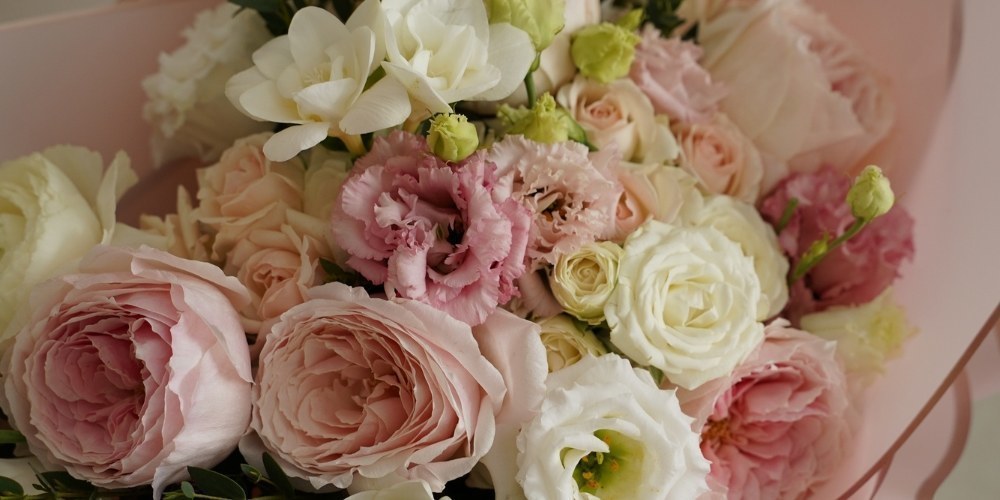
Picture this: you order a Medium 21-stem “Forever Sarah Bernhardt” bouquet on a Tuesday for your partner’s Thursday birthday dinner. On arrival, the buds pass the marshmallow test with a hint of pink at the tips. You recut the stems, use lukewarm water and leave the vase in the cool dining room. Wednesday night, a few buds have cracked; you swap in warm water to nudge the rest. By Thursday evening, the table holds 21 soft pink blooms right at their peak. The fragrance peaks while guests are there, too.
The New-Parent Welcome Home
New parents do not need high-maintenance flowers. A compact 10-stem bouquet in a sturdy, wide vase works best: set it away from the nursery window and pull spent blooms as they fade. Compared with lilies, peonies carry far less pollen, a gentle choice for a home with a newborn.
The Statement Arrangement
For a milestone anniversary, a 50-stem or 100-stem arrangement fills a room. My advice for these is always the same: split it. Three medium vases staged in the living room, kitchen and bedroom drink better, open more evenly and let you enjoy the flowers everywhere. For extra-large gifts, the large-format arrangements at https://mypeonika.com/collections/delivery-of-large-bouquet-of-flowers-in-miami are built to be shared out this way, from 100 red roses to giant baskets and boxes.
Why the Source Matters: Starting With Great Peonies
Care can only stretch what the flower already has. A peony cut at the right stage and kept cool in transit will outperform a stressed stem every time.
That is where My Peonika stands out for me. Its florists assemble each bouquet shortly before delivery, and it travels in an aqua hydration pack inside a protective box, so stems never sit dry. Every order comes with flower food, printed care instructions and a complimentary card. I also appreciate that they back it with a 3-Day Freshness Guarantee: follow the instructions and if the bouquet wilts within three days, they replace it for free. That kind of promise tells you a shop trusts its own sourcing.
For anyone searching for peonies miami, the range at My Peonika is unusually deep. Bouquets come in five sizes, from Small (10 stems) to XXL (100 stems). Highlights include:
- “Forever Sarah Bernhardt” in classic pink, $115 to $800
- “Bowl of Cream” in creamy white, $147 to $950
- “Pillow Talk”, a soft blush favorite, $155 to $1,225
- “Peony Ice Cream” flower box, $159 to $1,090
- “Cotton Candy Lagoon”, peonies paired with hydrangeas, $175
Peonies are offered year-round when in stock, sourced from growers in places like the Netherlands, Ecuador, Kenya and Colombia. Popular items do sell out outside of the main season, so ordering a few days ahead is smart for a specific date. Same-day delivery is available seven days a week for orders placed by 5 PM, and delivery is free on orders of $190 or more within 10 miles. As a MyPeonika Miami florist studio based in Hallandale Beach, they cover Brickell, Coral Gables, Miami Beach, Aventura, Coconut Grove, Hollywood and more, including deliveries to Miami-area hospitals.
The Eco-Friendly Side of Peony Bouquet Care
Making flowers last longer is already a sustainable choice: every extra day in the vase means fewer replacements and less waste. A few more habits stretch that further.
- Skip floral foam. Most green foam is a single-use plastic that breaks into microplastics. Peonies drink better in plain water anyway.
- Compost spent blooms. Petals, stems and leaves break down quickly in a backyard bin or a city compost drop-off. Remove ribbon and any tape first.
- Reuse vases and boxes. A sturdy delivery box makes a great storage bin or kids’ craft container, and kraft paper wrapping can be recycled or reused for gift wrap.
- Dry a few petals. Petals dried flat for a week make natural confetti.
Troubleshooting: When Peonies Won’t Cooperate
My Peony Buds Won’t Open
First, do the marshmallow test. If the bud is soft, recut the stem and place it in warm water in a warm room; give it 24 to 48 hours. If buds feel sticky, gently wipe them with a damp paper towel. Peony buds secrete a sugary nectar, and that residue can glue the outer sepals together. If a bud remains hard and green after three days, it was likely cut too early and may never open fully.
There Are Ants on My Peonies
Ants love that sugary nectar on peony buds. A popular myth says peonies need ants to open. They do not; the buds open perfectly well without them. For garden-cut stems, swish each bud upside down in cool water before bringing them inside.
The Heads Are Drooping
Drooping usually means an air bubble or blockage in the stem. Recut 1 to 2 inches under water, then stand the stems in deep, cool water for an hour or two. Heavy heads also benefit from a vase tall enough to support at least half the stem length.
The Petals Are Dropping Fast
Fast shattering is a sign of heat, ethylene or simple age. Move the vase to a cooler room, away from fruit, and remove the most open blooms. Fully blown peonies naturally last a day or two; that is the trade-off for such a spectacular show.
FAQ: Peony Bouquet Care
How long do peonies last in a vase?
Expect roughly 5 to 7 days of bloom once they open, plus the 1 to 4 days it takes buds to unfurl. With cool temperatures and daily water changes, a well-sourced bouquet can stay beautiful for a week or more in total.
Does warm water really help peonies open?
Yes. Warm water (about 100 to 110°F) moves into stems faster than cold water, which helps soft buds hydrate and loosen. Use it to speed things up, then switch back to cool water to slow aging once blooms open.
Can I order peonies in Miami outside spring?
Often, yes. My Peonika offers peonies year-round when in stock, though specific varieties may sell out off season. Their “Artist’s Choice” custom bouquet, from $116 to $365, is a great fallback when you want a particular palette.
What’s the best homemade flower food?
A common recipe is 1 teaspoon of sugar, 2 teaspoons of lemon juice and a few drops of household bleach per quart of water. It works in a pinch, though the packet included with a professional bouquet is more precisely balanced.